
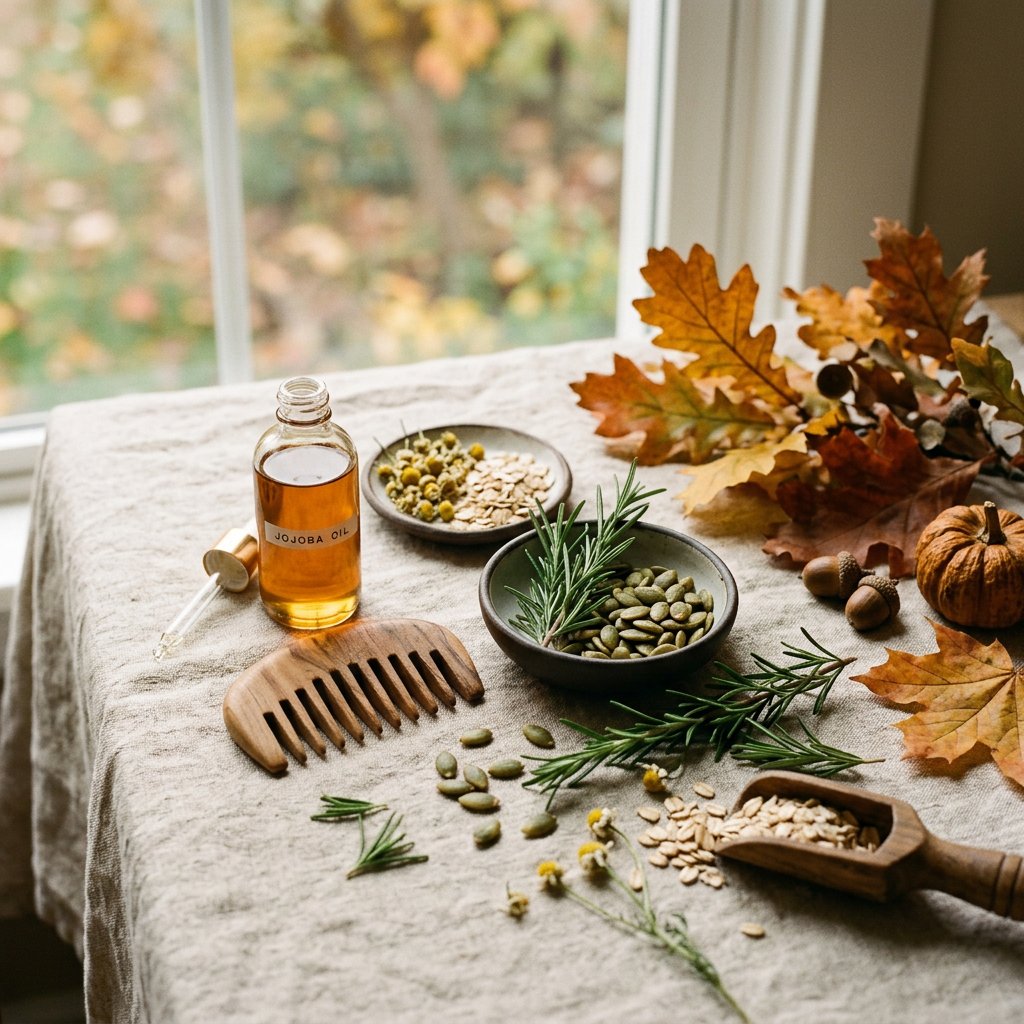
Fall and Winter Herbal Protocols for Dryness, Flaking, and Density
As the air turns cooler and indoor heat comes on, many scalps begin to protest. What felt balanced in summer can suddenly feel tight, flaky, or unusually dry. Shedding may increase. The hair can look duller and feel more brittle. These shifts are common. Lower humidity, hot showers, wool hats, and the general dryness of the season all play a part.
A seasonal scalp reset helps the skin and follicles adjust. It does not require a complete overhaul of your routine. Instead it focuses on richer moisture, soothing herbs, and a few targeted practices that address the specific stresses of fall and winter. The ingredients stay simple and kitchen-friendly: oils, honey, oats, rosemary, nettle, and other accessible botanicals.
This protocol builds on the foundation we have already covered. Keep your low-tension styles, continue light protein support as needed, and maintain your basic scalp care habits. The adjustments below simply tilt the routine toward greater comfort and protection during the colder months. We will also look at simple internal supports that work alongside the topical care.
Why Scalps Struggle in Cooler Weather
Cold air holds less moisture. Indoor heating removes even more. The scalp’s natural oil production can slow, leaving the skin barrier less protected. Hot water from longer showers strips what little oil remains. Hats and scarves create friction. The result is often tightness, flaking that is more dryness than true dandruff, and hair that feels less resilient.
Some people also notice a seasonal uptick in shedding. This can be related to the hair cycle and to the added stress of dryness and breakage. Supporting the scalp with consistent moisture and gentle stimulation helps reduce the extra loss that comes from a compromised barrier.
Core Principles for a Fall and Winter Reset
- Enrich the moisture by switching to slightly richer oils and more frequent light sealing of the lengths.
- Soothe and calm the scalp with ingredients known for reducing tightness and mild flaking: oat, aloe, honey, and chamomile.
- Keep cleansing gentle. Avoid anything that leaves the scalp feeling stripped.
- Protect from friction with satin-lined hats and careful handling under winter accessories.
- Stay consistent with scalp massage. Blood flow and product absorption both benefit from regular finger work, especially when the scalp feels tight.
- Support the scalp from within with steady hydration, nourishing fats, and a few simple herbal infusions.
A Simple Seasonal Oil Blend
This richer blend works well from October through early spring for most people.
Ingredients
- ⅓ cup jojoba oil
- 2 tablespoons pumpkin seed oil or castor oil
- 1 tablespoon sesame oil or olive oil (optional for extra richness)
- Dried rosemary and a small amount of dried nettle for infusion, or 10 drops of rosemary essential oil added after straining
Infuse the dried herbs in the jojoba for one to two weeks using the cold method, or use the warm infusion method for a faster result. Strain, then stir in the richer oils. Store in a dark glass bottle.
Apply three to five times per week. Warm a few drops between your palms, part the hair, and massage into the scalp for several minutes. Leave on for at least thirty minutes or overnight. In very dry conditions you may enjoy using it more often with a lighter hand.
Soothing Rinse for Tight or Flaky Scalps
Oat and Honey Rinse
Steep ¼ cup colloidal oatmeal or finely ground oats in 2 cups of hot water for 20 minutes. Strain. Stir in 1 tablespoon of raw honey while the liquid is still warm. Let cool completely.
After cleansing, pour the rinse over the scalp and hair. Massage gently. Leave on for 5 to 10 minutes, then rinse with cool water or leave a light layer in if your hair likes it. Use once or twice a week when the scalp feels particularly dry or itchy.
Aloe and Chamomile Variation
Brew a strong cup of chamomile tea and let it cool. Mix with an equal amount of pure aloe vera juice. Use as a final rinse or light mist between washes. This version feels especially calming when the scalp is reactive.
Internal Remedies That Support the Scalp in Fall and Winter
Topical care works best when the body has the basic building blocks it needs. In colder months, dryness, flaking, and increased shedding often improve when internal support is added alongside oils and rinses. The suggestions below stay simple, affordable, and realistic for daily life.
Steady hydration
Dry indoor air increases the body’s need for fluid. Keep a warm drink nearby throughout the day. Herbal infusions count toward hydration and are often easier to drink consistently than cold water in winter. Aim for regular sips rather than large amounts at once.
Nettle and rosemary infusion
Nettle is naturally rich in minerals. Rosemary has a long traditional use for circulation and scalp vitality. Together they make a practical daily tea.
Use 1 teaspoon dried nettle and ½ teaspoon dried rosemary per cup of hot water. Steep for 10 minutes, strain, and drink. One cup most days is a good starting point. You can brew a larger amount in the morning and sip it warm through the afternoon.
Healthy fats for skin and hair comfort
Essential fatty acids help support the skin barrier from within. Easy daily options include a teaspoon of ground flaxseed or chia seeds added to oatmeal or yogurt, a small handful of walnuts or pumpkin seeds, or a drizzle of olive oil on meals. These small additions are often more sustainable than large supplement doses.
Amla and vitamin C support
Amla has a long history in traditional hair care. If you have amla powder, stir a small amount into warm water or a smoothie a few times per week. If amla is not available, focus on vitamin C rich foods such as oranges, kiwi, strawberries, or bell peppers. Vitamin C supports tissue health and collagen, both relevant to hair resilience.
Warming spices for circulation
Cooler weather is a good time for gently warming spices. A pinch of ginger or cinnamon in tea or breakfast can feel comforting and may support circulation. Fresh ginger sliced into hot water makes a simple, effective infusion on cold mornings.
Stress and sleep support
Shorter days and fuller schedules often raise stress levels, which can influence the hair cycle. A consistent evening wind-down helps. Pair your nighttime scalp oil massage with slower breathing. A cup of mild chamomile, tulsi, or lemon balm tea an hour before bed can signal the body that it is time to rest. Some people also find ashwagandha supportive during demanding seasons when used mindfully and according to personal tolerance.
You do not need to do everything at once. Choose one or two internal habits that feel realistic and keep them steady for several weeks. The combination of external moisture and internal nourishment usually brings better results than topical care alone.
Adjusting Your Wash Day for Colder Months
Cleanse less aggressively. Many people find they can stretch the time between washes slightly in winter because oil production slows. When you do wash, choose a mild cleanser or a diluted co-wash.
Follow cleansing with one of the soothing rinses above. Then apply a generous amount of leave-in moisture while the hair is still damp. Seal more thoroughly than you might in summer. Focus extra product on the ends, which tend to suffer most from dry air and friction from coats and scarves.
If you use protein treatments, continue them on the same schedule but be extra attentive to following with rich moisture. Dry air can make protein feel more drying if moisture is not locked in well.
Daily and Nighttime Protection
During the day, if you wear a hat, choose one with a satin or silk lining when possible, or wear a satin scarf or bonnet underneath. This small barrier reduces breakage and helps the hair retain moisture.
At night, continue with a satin pillowcase or bonnet. In winter the added protection matters more because the air is drier and friction shows up faster as dryness and tangles.
A light application of oil or sealing butter on the ends before bed helps prevent the brittle feeling that many notice in the morning during colder months.
Supporting Density Through the Season
Keep up the scalp massage. Even five minutes most days supports circulation and gives you a chance to check how the skin feels. If certain areas seem thinner, give them a bit of extra attention with oil and gentle circles.
Stay consistent with the herbal oils. Rosemary, pumpkin seed, and nettle infusions remain useful. The combination of massage and nutrient-dense oil is one of the most reliable ways to support the appearance of density over time.
A Sample Weekly Rhythm for Fall and Winter
Most days
Light scalp oil and short massage. Nighttime satin protection. Minimal daytime manipulation. One nourishing herbal tea or mineral-rich infusion.
Wash days (every 4 to 7 days depending on your hair)
Gentle cleanse. Oat and honey or aloe-chamomile rinse. Thorough moisture and richer sealing. Low-tension style to dry.
Once a week
Slightly longer oil treatment left on for an hour or overnight. Extra focus on massage.
Every 2 to 4 weeks
Light protein treatment if your hair still benefits from it, always followed by strong moisture.
Closing
A seasonal scalp reset is less about dramatic change and more about thoughtful adjustment. Richer oils, soothing rinses, gentler cleansing, better protection from dry air and friction, and simple internal supports help the scalp stay comfortable and the hair stay resilient through the colder months.
Start with the seasonal oil blend, the oat-honey rinse, and one internal habit such as nettle-rosemary tea this week. Notice how your scalp feels after a few uses. Protect the hair under hats and at night. Keep the massage consistent. These small shifts usually make the season noticeably easier on both scalp and strands.
Your hair does not have to suffer through winter. With a few steady herbal supports inside and out, it can move through the colder months feeling as supported as it does in milder weather.
Well Sweetie, Let’s Reset!



Leave a Reply