
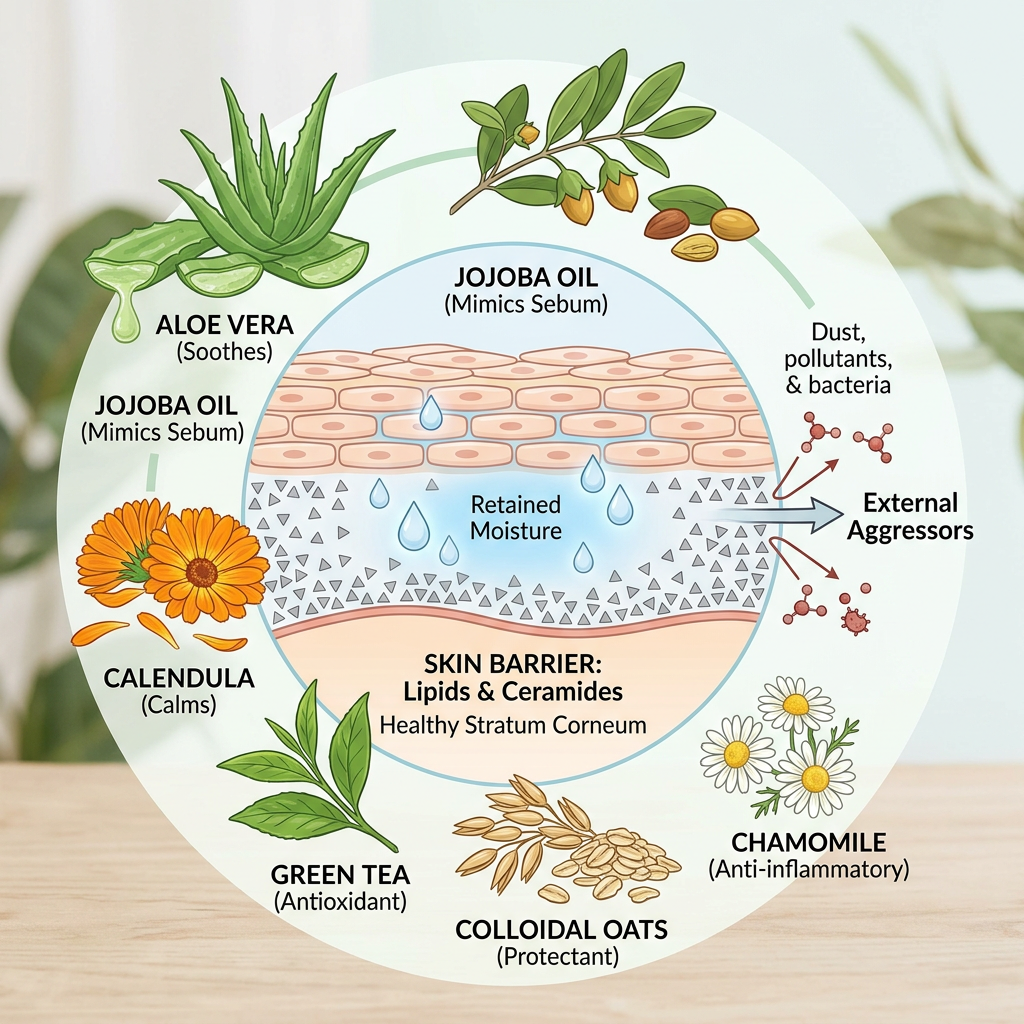
Multi-Layer Rituals with Oats, Honey, Mango Butter, and Calendula for Compromised, Sensitive, or Eczema Prone Skin
When the skin barrier is compromised, everything feels harder. The face or body can sting, itch, flake, or turn red from products that used to be fine. Ordinary water may feel irritating. Makeup sits poorly. Even gentle cleansers can leave the skin tight and reactive. This is the skin asking for a different kind of care: slower, simpler, and focused on repair rather than results.
A damaged barrier means the outermost layer of skin is no longer doing its job well. Moisture escapes too easily. Irritants get in more readily. The goal of barrier repair is not to strip, exfoliate, or “fix” the skin aggressively. It is to calm, replenish, and protect so the skin can restore itself.
This guide uses four kitchen and botanical staples that have long histories of soothing compromised skin: colloidal oatmeal, raw honey, mango butter, and calendula. Combined in simple layered rituals, they help reduce discomfort and support the skin’s natural recovery process. The approach is gentle enough for sensitive, reactive, and eczema-prone skin when introduced carefully.
Understanding the Compromised Barrier
A healthy skin barrier holds water in and keeps irritants out. When it is damaged by over cleansing, harsh ingredients, weather, stress, or conditions like eczema the skin loses moisture quickly and becomes inflamed more easily. Common signs include tightness after washing, flaking, redness, itching, burning, or a feeling that the skin is “raw.”
Repair takes consistency more than intensity. The skin needs fewer ingredients, less frequent washing, and reliable occlusion (sealing) to hold moisture in while it recovers. Rushing the process with active ingredients often prolongs the problem.
The Four Core Ingredients
Colloidal oatmeal
Finely ground oats that have been processed to disperse in water. Oats contain compounds that soothe itching and support the skin’s moisture barrier. They are one of the most reliable gentle ingredients for reactive skin.
Raw honey
Naturally humectant and soothing. Honey draws moisture toward the skin and has a long traditional use for calming irritation. Use raw, unprocessed honey when possible.
Mango butter
A soft, emollient butter that melts easily and provides comfortable occlusion without feeling as heavy as some other butters. It helps seal in moisture and softens dry, rough areas.
Calendula
The flower of the pot marigold. Calendula-infused oil or strong tea is traditionally used to calm redness and support skin comfort. It pairs especially well with sensitive or eczema-prone skin.
These four ingredients form the foundation of the rituals below. They can be used alone or layered depending on how reactive the skin is on any given day.
The Basic Multi-Layer Ritual
This sequence is designed for face or body when the skin is compromised. Introduce one new element at a time if your skin is highly reactive.
Step 1: Gentle cleanse or rinse
Use lukewarm water only, or a very mild oat-based cleanser if needed. Avoid foaming products and hot water. Pat dry do not rub.
Step 2: Hydrate while damp
Apply a thin layer of colloidal oatmeal infusion or diluted raw honey to the skin while it is still slightly damp. This gives the skin water-binding ingredients before sealing.
Step 3: Seal
While the skin is still damp from the previous step, apply a thin layer of mango butter or calendula infused oil. The goal is light occlusion that holds moisture without suffocating the skin.
Step 4: Leave it alone
Avoid further products, actives, or frequent touching while the skin is recovering.
Perform this ritual once or twice a day, keeping everything else minimal.
Practical Recipes
Colloidal oatmeal soak or compress
Grind plain oats into a fine powder (or buy colloidal oatmeal). For a face compress, steep 1–2 tablespoons in a cup of hot water for 10–15 minutes, then cool. Soak a clean cloth and apply to the skin for 5–10 minutes. For body, add a handful of colloidal oatmeal to a lukewarm bath and soak for 10–15 minutes.
Simple honey hydrator
Mix 1 teaspoon raw honey with a few drops of cooled boiled water or oat infusion to thin it slightly. Apply a thin layer to clean damp skin. Leave for 10–20 minutes or use as a light leave-on if tolerated. Rinse or tissue off if it feels sticky.
Mango butter seal
Use pure mango butter, or soften a small amount with a few drops of jojoba or calendula oil for easier spreading. Apply a very thin layer as the final step. A little is enough.
Calendula-infused oil
Fill a clean jar halfway with dried calendula flowers. Cover completely with a light carrier oil (jojoba or sunflower). Let infuse for 2–4 weeks out of direct sunlight, shaking occasionally, then strain. Use the oil as a seal or mix a few drops into mango butter.
Adjusting for Different Levels of Sensitivity
Highly reactive or currently flared skin
Start with only lukewarm water and colloidal oatmeal compresses. Add honey only after the skin has calmed for several days. Introduce mango butter or calendula oil last and in very small amounts.
Moderately dry or tight skin
You can usually begin with the full multi-layer ritual right away. Use honey and oat infusion for hydration, then seal with mango butter.
Body versus face
The same ingredients work for both, but the body can often tolerate slightly richer application of butter. On the face, keep layers thinner to avoid congestion.
Supporting Habits That Speed Recovery
Reduce washing frequency if possible. Over-cleansing is one of the fastest ways to keep a barrier impaired.
Avoid known irritants during the repair period: fragrance, essential oils (except carefully tested calendula), strong actives, physical scrubs, and hot water.
Keep showers short and lukewarm. Follow immediately with the hydration and sealing steps while skin is still damp.
Support the skin from inside with steady hydration and healthy fats. The internal suggestions from earlier hair articles (omega-rich seeds, simple herbal infusions) also benefit the skin barrier.
Manage stress where possible. Barrier function and inflammation are influenced by the nervous system. Simple evening rituals, including the skin routine itself, can help.
How Long Repair Takes
Mild barrier disruption can improve noticeably within one to two weeks of consistent gentle care. More significant or long-standing impairment, including eczema-prone skin, often needs several weeks to months of steady support. The skin usually improves in stages: first less stinging, then less tightness, then better comfort and fewer reactive episodes.
Progress is rarely linear. Flare-ups can still occur. The goal is to shorten their duration and reduce their intensity over time by returning to the basic repair ritual whenever the skin becomes reactive again.
Closing
Barrier repair is quiet work. It asks for less rather than more. Your skin needs fewer products, gentler water, reliable moisture, and consistent sealing. Oats calm. Honey hydrates. Mango butter protects. Calendula soothes. Used together in simple layers, they give compromised skin the conditions it needs to recover.
Start with the most basic version of the ritual this week. Introduce one ingredient at a time if your skin is very reactive. Stay consistent even when the skin begins to feel better, because the barrier continues to strengthen with ongoing support.
Healthy skin is not the result of aggressive correction. It is the result of steady, respectful care that allows the barrier to do its job again. Give it that care, and the comfort usually follows.
Well Sweetie, protect your skin barrier!
More Skin Post




Leave a Reply