


Full Champi-Style Rituals, Herb Blends for Different Concerns, and Long-Term Resilience Practices
In Ayurveda, hair oiling is not a quick beauty step. It is a ritual of nourishment, nervous system support, and long-term resilience. The practice known as champi or abhyanga for the head has been used for generations to keep the scalp comfortable, the hair strong, and the mind quieter. Modern life has made the full traditional ritual harder to maintain, but the core principles still work beautifully when adapted to real schedules and available ingredients.
This guide brings the spirit of Ayurvedic hair oiling into a practical, kitchen-friendly form. You will find a simplified champi-style ritual, herb blends matched to common concerns, guidance for different hair and scalp needs, and a realistic way to keep the practice going for months rather than days.
The Heart of the Traditional Practice
Traditional hair oiling usually involves warming a herbal oil, applying it generously to the scalp and lengths, massaging with intention, and leaving it on for a meaningful amount of time before washing. The massage itself is considered as important as the oil. It supports circulation, eases tension held in the scalp and jaw, and creates a clear pause in the day.
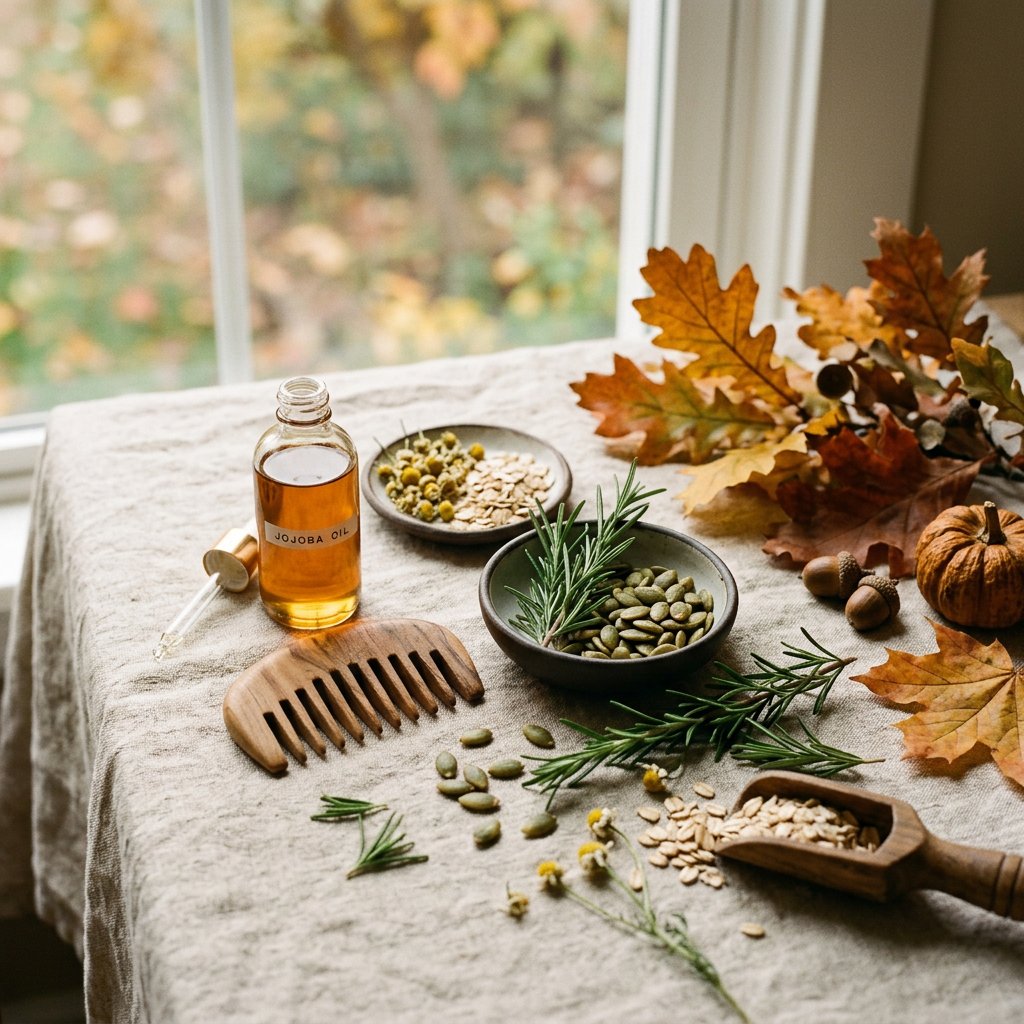
The oils are typically infused with herbs chosen for their effects on the scalp and nervous system. Bhringraj, amla, brahmi, fenugreek, and rosemary (a more modern but compatible addition) appear often. The carrier is frequently sesame or coconut, though jojoba and other lighter oils adapt well for finer hair or warmer climates.
The goal is cumulative. One session feels pleasant. Regular sessions over weeks and months tend to improve scalp comfort, reduce breakage, and support a healthier growth environment.
A Practical Champi-Style Ritual for Modern Life
You do not need two free hours. A meaningful version can fit into 25–40 minutes.
What you need
- A herbal oil (recipes below)
- A warm towel or shower cap
- Gentle cleanser for afterward
- 20–40 minutes of unhurried time
Steps
- Warm a small amount of oil by placing the bottle in a cup of hot water for a few minutes. The oil should feel comfortably warm, never hot.
- Part the hair and apply the oil directly to the scalp with your fingertips or a dropper. Start at the crown and work outward.
- Once the scalp is covered, smooth oil down the lengths, focusing on the ends.
- Massage for 5–10 minutes using the pads of your fingers. Use slow circles across the whole scalp. Include the temples, the base of the skull, and the area around the ears. This is the heart of the ritual.
- If you have time, cover the hair with a warm towel or shower cap and leave the oil on for 20–60 minutes. Longer is traditional; even 15–20 minutes still offers benefit.
- Cleanse gently. You may need to shampoo twice to remove the oil fully. Follow with a light conditioner on the ends if needed.
- Style with low tension methods so the benefits of the oil session are not undone by pulling.
Do this ritual once a week as a deeper treatment. On other days, a lighter application of the same oil with a shorter massage still supports the scalp.
Herb Blends for Common Concerns
These blends use accessible herbs and can be made as infusions or mixed from ready oils.
For dryness and tightness
Base: jojoba or sesame oil
Herbs: bhringraj, fenugreek seeds (lightly crushed), a little marshmallow root or oat straw if available
This combination softens the scalp and helps the hair hold moisture.
For thinning or slower growth appearance
Base: jojoba or pumpkin seed oil
Herbs: rosemary, bhringraj, a small amount of amla
Rosemary and bhringraj are the most commonly reached-for pair for this concern. Consistency with massage matters as much as the herbs.
For excess oiliness or buildup tendency
Base: lighter jojoba or grapeseed
Herbs: rosemary, neem leaf (small amount), tea tree only if the scalp tolerates it well
Keep the application lighter and focus more on the scalp than the lengths. Follow with a thorough but gentle cleanse.
For sensitive or reactive scalps
Base: plain jojoba or calendula-infused oil
Herbs: chamomile, lavender (small amount), oat
Avoid strong essential oils at first. Prioritize comfort over intensity.
General weekly nourishing blend
1/2 cup jojoba or sesame oil
2 tablespoons dried bhringraj
1 tablespoon dried rosemary
1 tablespoon dried amla or fenugreek
Infuse for one to two weeks (cold method) or use a gentle warm infusion. Strain and bottle. This becomes a reliable all-purpose oil for most people.
Matching the Practice to Your Hair and Life Stage
Finer hair often prefers lighter carriers and less product on the lengths. Thicker or coarser hair usually enjoys richer oils and more generous application. High porosity hair benefits from the sealing effect of oil left on longer. Low porosity hair may do better with slightly warmed oil and shorter contact time so the product does not sit on the surface.
In midlife, when dryness and changes in density are more common, the combination of regular champi-style oiling and low-tension handling becomes especially supportive. The nervous system benefit of the slow massage is often as valuable as the effect on the hair itself.
Building Long-Term Resilience
The real power of this tradition shows up over months, not days. Aim for one fuller oil session each week and lighter applications two or three other times. Keep the massage intentional even when the session is short. Protect the hair from unnecessary tension the rest of the week so the gains are not lost to breakage.
Track how your scalp feels and how the new growth looks over a 90-day period. Many people notice less tightness, improved shine, and better length retention before they see dramatic changes in density. Both outcomes are meaningful.
If you already use fermented rinses, light protein treatments, or seasonal adjustments, this oiling practice layers well with them. Use the oil ritual on a non-protein day and follow with your usual moisture and sealing steps after cleansing.
Common Adjustments
If the oil feels too heavy, switch to a lighter carrier or reduce the amount used on the lengths.
If the scalp feels congested, clarify gently every week or two and lighten the formula.
If time is the biggest barrier, reduce the leave-on period but protect the massage time. Five to seven minutes of real massage is more valuable than a long session done in a rush.
Closing
Ayurvedic hair oiling traditions offer something rare in modern hair care: a practice that nourishes the scalp, supports the nervous system, and builds resilience through repetition rather than intensity. You do not need every traditional herb or hours of free time. You need a good oil, willing hands, and enough consistency for the benefits to accumulate.
Choose one blend that matches your main concern. Set aside time once a week for a fuller session. Keep the daily or near-daily touch light and steady. Over the coming months the scalp often becomes more comfortable, the hair more resilient, and the ritual itself a small source of calm.
This is care that works with the body instead of against it. Tend the scalp with warmth and attention, and the hair tends to follow.
Well Sweetie, Let’s get to oiling.



Leave a Reply