
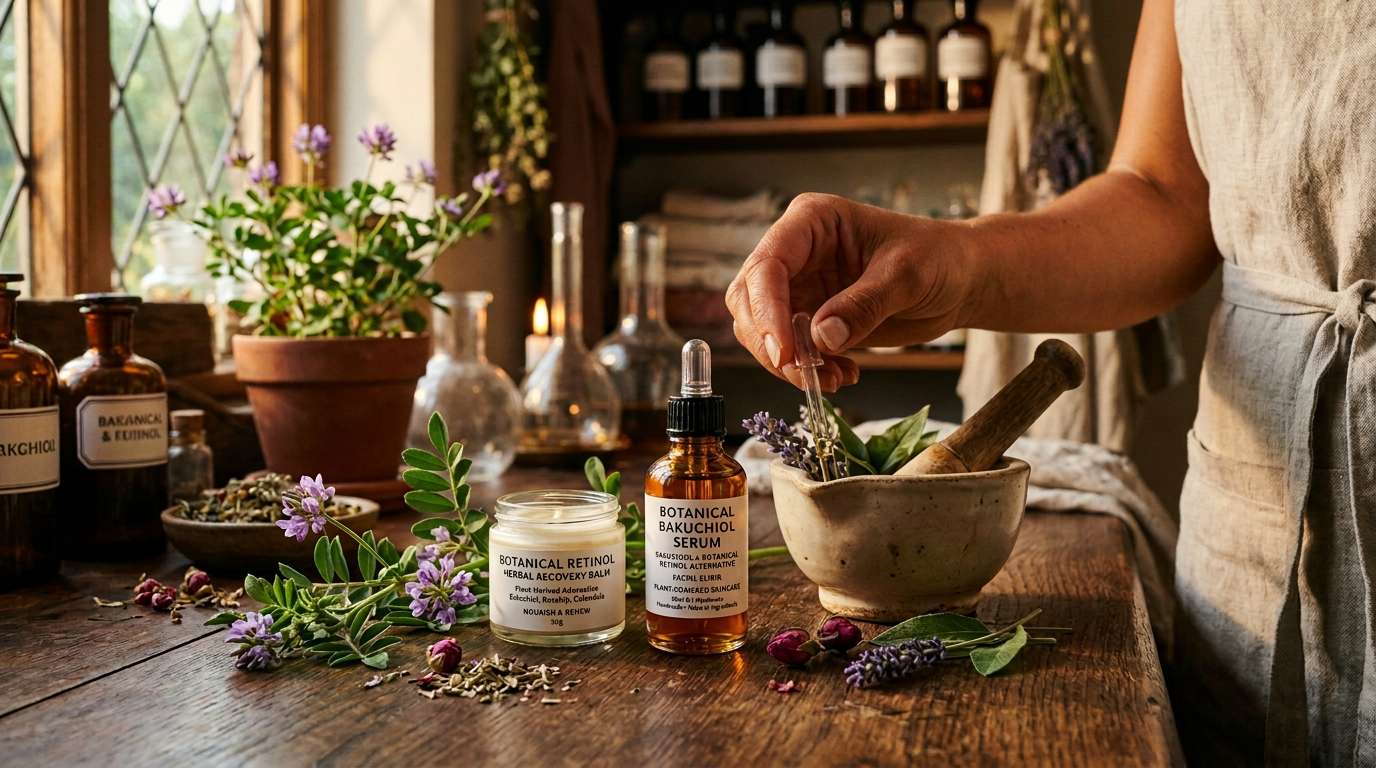

Gentle Anti-Aging Protocols Using Plant Actives, Overnight Masks, and Progressive Introduction Guides
The desire for smoother, firmer, more even-looking skin does not have to come with irritation, peeling, or the long adjustment period that traditional retinol often requires. For many people, especially those with sensitive, reactive, or barrier-compromised skin, conventional retinoids create more problems than they solve. Redness, dryness, flaking, and increased sensitivity are common. Some people simply cannot tolerate them at all.
Bakuchiol and other botanical alternatives offer a different path. These plant-derived ingredients support the appearance of healthier, more resilient skin with a much lower risk of irritation. They work more slowly and more gently than pharmaceutical retinoids, but for many they deliver meaningful improvement in texture, tone, and overall comfort without the harsh adjustment phase.
This guide focuses on practical, kitchen-and-botanical approaches to gentle anti-aging. You will find clear explanations of the key ingredients, progressive introduction protocols, overnight mask recipes, layering strategies that protect the barrier, and realistic timelines for results. The emphasis remains on supporting the skin rather than forcing it.
Why Look Beyond Traditional Retinol
Retinol and prescription retinoids are well-studied for their effects on cell turnover, collagen support, and surface texture. They also come with a well-documented set of side effects. Many people experience a period of irritation known as retinization that can last weeks or months. For those with eczema-prone, rosacea-prone, or simply sensitive skin, that period may never fully resolve.
Barrier health must come first. A compromised barrier makes every active ingredient more irritating and slows overall improvement. The barrier repair practices covered in the previous article form the necessary foundation. Once the skin is calm and comfortable, gentle botanical alternatives can be introduced with far better tolerance.
Botanical options generally work through antioxidant support, mild encouragement of healthy cell function, and reduction of visible inflammation. They do not produce the same rapid cell turnover as strong retinoids, which is exactly why they are more suitable for sensitive skin and for long-term daily use.
Key Botanical Ingredients for Gentle Anti-Aging
Bakuchiol
Extracted from the seeds and leaves of the Psoralea corylifolia plant (babchi). Bakuchiol has been studied for its ability to improve the appearance of fine lines, elasticity, and pigmentation with significantly less irritation than retinol. It is the closest widely available botanical alternative in terms of researched outcomes. Look for well-formulated serums or oils that list bakuchiol clearly, or work with pure bakuchiol diluted in a carrier if you prefer to blend your own.
Rosehip oil
Naturally rich in vitamins and essential fatty acids. Rosehip supports the appearance of smoother texture and more even tone while providing lightweight moisture. It pairs well with bakuchiol and other botanicals.
Sea buckthorn
High in antioxidants and fatty acids. Often used in small percentages because of its strong color and potency. Supports skin resilience and a healthier-looking surface.
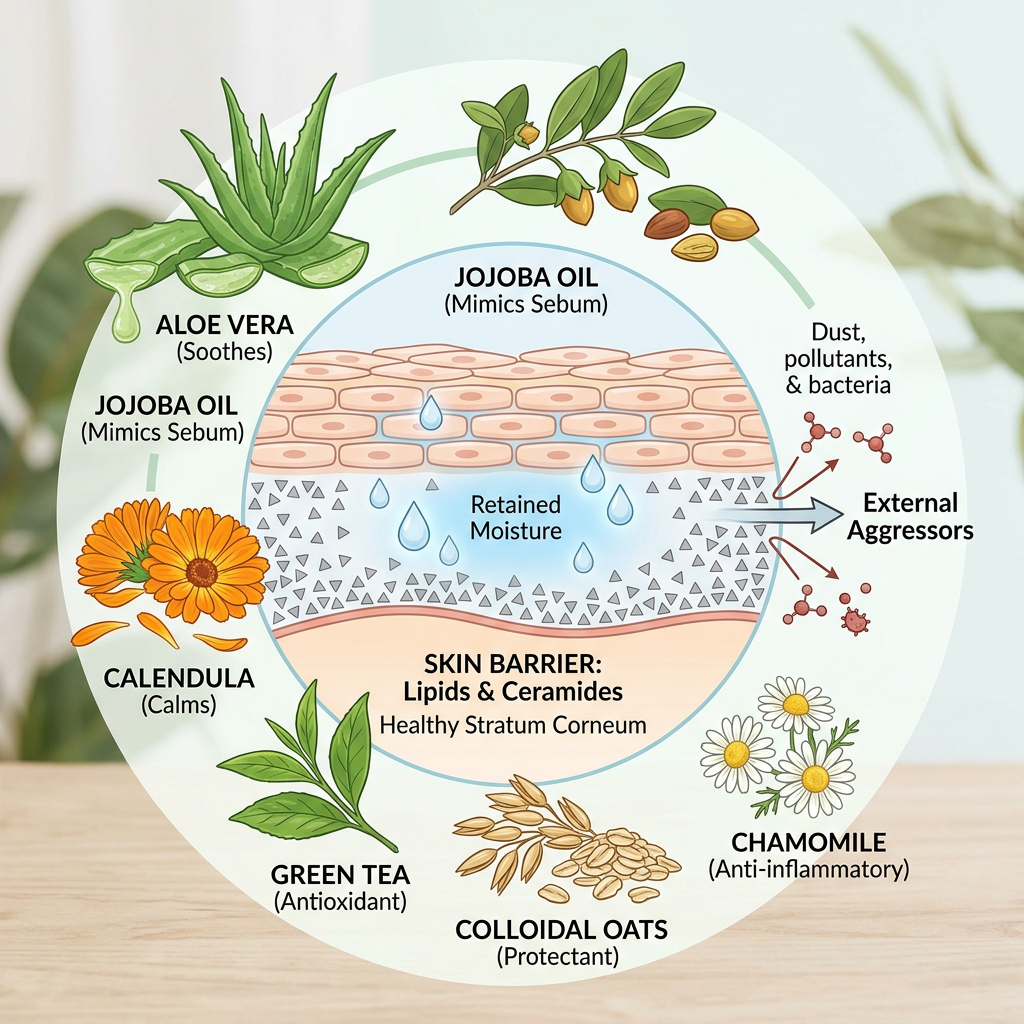
Calendula and chamomile
Primarily soothing. These help keep the skin calm while other ingredients do their work. Especially useful during the introduction phase or for reactive skin.
Green tea and other polyphenol-rich botanicals
Offer antioxidant support that helps protect the skin from everyday environmental stress. They contribute to a more even, comfortable appearance over time.
Mango butter and other soft butters
Provide the occlusion needed to keep the skin comfortable while using any active ingredients. A well-sealed barrier tolerates botanicals better and shows results more clearly.
No single ingredient replaces a complete approach. The protocols below combine gentle actives with strong barrier support.
Preparing the Skin Before Starting
Do not begin botanical retinol alternatives on a compromised barrier. Spend at least two to four weeks with the barrier repair ritual from the previous article if your skin is currently reactive, flaky, or easily irritated. The skin should feel comfortable after cleansing, accept moisture without stinging, and show reduced redness before you introduce anything new.
During preparation:
- Keep cleansing very gentle.
- Use colloidal oatmeal, honey, and mango butter as your main support.
- Avoid all strong actives, exfoliants, and essential oils.
- Protect the skin from hot water and prolonged sun exposure.
Once the skin feels stable, you are ready to begin a progressive introduction.
Progressive Introduction Protocol
Rushing is the most common reason botanical actives still cause irritation. A slow, deliberate schedule protects the barrier and improves long-term tolerance.
Weeks 1–2: Foundation only
Continue barrier support. Add a simple antioxidant oil such as rosehip or a calendula infusion once daily if desired. No bakuchiol yet. Observe how the skin responds to the extra oil.
Weeks 3–4: First introduction
Begin bakuchiol (or your chosen botanical alternative) once every three days. Apply a small amount in the evening after any water-based hydration and before sealing with mango butter or a rich cream. Keep the rest of the routine unchanged. Watch for any tightness, redness, or new sensitivity over the following two days.
Weeks 5–6: Gradual increase
If the skin remains comfortable, move to every other night. Continue to seal well. Maintain gentle cleansing and barrier-focused daytime care.
Weeks 7–8 and beyond
If tolerance remains good, you may use the botanical active most evenings. Some people prefer to stay at every other night long-term. There is no requirement to reach daily use. Consistency at a comfortable frequency produces better results than forcing higher frequency.
At every stage, reduce frequency or pause immediately if irritation appears. Return to pure barrier support until the skin is calm again, then reintroduce more slowly.
Overnight Mask Recipes for Gentle Support
Overnight masks allow longer contact time with soothing and nourishing ingredients while you sleep. These recipes are designed to complement botanical actives rather than compete with them.
Basic calming overnight mask
1 teaspoon raw honey
1 teaspoon pure aloe gel
½ teaspoon mango butter, softened
Optional: 2–3 drops calendula-infused oil
Mix until smooth. Apply a thin layer to clean skin in the evening. Leave on overnight. Rinse or tissue off in the morning if any residue remains. Use two to three times per week, especially on nights when you are not using bakuchiol.
Rosehip and bakuchiol support mask (for stable skin only)
1 teaspoon rosehip oil
2–3 drops bakuchiol serum or diluted bakuchiol
½ teaspoon mango butter
Mix and apply a very thin layer. Use once or twice a week after the introduction phase is complete. Always patch test first.
Oat and honey recovery mask
1 tablespoon colloidal oatmeal mixed with enough warm water or oat infusion to form a paste
1 teaspoon raw honey
Apply to clean skin, leave for 15–20 minutes, then rinse. Follow with sealing butter. This is ideal after any period of reactivity or as a weekly soothing treatment.
Layering Order for Best Tolerance
A consistent order reduces the chance of irritation and helps each ingredient perform its role.
- Cleanse very gently or rinse with lukewarm water.
- Apply any water-based hydration (aloe, oat infusion, or a simple hydrating mist).
- Apply bakuchiol or botanical active if it is an active night.
- Seal with mango butter, a soft butter blend, or a rich cream.
- Leave the skin alone.
In the morning, keep the routine even simpler: gentle rinse or cleanse, light hydration if needed, sealing, and sun protection. Botanical anti-aging work is best supported by daily sun protection, as improved cell function still leaves the skin vulnerable to UV stress.
Realistic Timelines and Expectations
Botanical alternatives work more gradually than pharmaceutical retinoids. Most people notice improved comfort and better hydration within the first few weeks. Visible changes in texture and evenness often appear between eight and twelve weeks of consistent use. Improvements in the appearance of fine lines and firmness continue to develop over several months.
Results depend on overall barrier health, sun protection, age, and consistency. These ingredients support the skin’s existing functions rather than forcing rapid turnover. The outcome tends to look like healthier, more resilient skin rather than a dramatic “treatment” effect. Many people prefer this subtler, more sustainable improvement.
Supporting Practices That Improve Outcomes
Sun protection is non-negotiable. Use a gentle mineral or well-tolerated sunscreen daily, even in winter and on cloudy days.
Continue barrier support indefinitely. The same oatmeal, honey, and butter practices that prepared the skin also help maintain results.
Avoid combining multiple strong actives. More is rarely better. One well-tolerated botanical active plus strong moisture and sealing produces clearer results than a complicated routine.
Manage internal factors. Steady hydration, healthy fats, adequate protein, and stress reduction all influence how the skin repairs and maintains itself. The internal suggestions from earlier articles in this series remain relevant.
Be patient with the process. Skin that has been irritated for a long time needs longer to stabilize. Skin that is already comfortable often shows benefits sooner.
Special Considerations for Midlife Skin
Hormonal shifts can change how the skin responds to both dryness and actives. Many people in midlife notice increased dryness, slower recovery from irritation, and greater sensitivity to ingredients they previously tolerated. The progressive introduction schedule becomes even more important.
Focus on comfort first. A well-hydrated, well-sealed barrier often improves the appearance of texture and firmness on its own. Botanical actives can then be added as a secondary support rather than the main event. Overnight masks with honey, aloe, and mango butter are particularly useful during this stage of life.
Troubleshooting
If mild redness or tightness appears, pause the active ingredient and return to pure barrier support for one to two weeks. Reintroduce at a lower frequency.
If the skin feels congested, reduce the amount of butter or oil and ensure cleansing is thorough but still gentle.
If no visible change occurs after three months of consistent use, review the fundamentals: sun protection, barrier health, and overall consistency. Botanical actives cannot compensate for daily UV exposure or a chronically impaired barrier.
If the skin becomes more reactive over time, simplify the entire routine. Fewer products almost always help.
Closing
Gentle anti-aging with bakuchiol and botanical alternatives is an exercise in patience and respect for the skin’s limits. These ingredients offer a way to support texture, tone, and resilience without the irritation that stops many people from maintaining a routine. The real foundation remains barrier health. Once the skin is calm and comfortable, botanical actives can be introduced slowly and sustainably.
Begin with preparation. Strengthen the barrier first. Then follow the progressive schedule without rushing. Use overnight masks to nourish and soothe. Protect the skin from the sun every day. Over the coming months, the skin often becomes not only smoother and more even but also noticeably more tolerant and comfortable.
Healthy-looking skin is rarely the result of aggressive intervention. It is more often the result of consistent, intelligent support that allows the skin to function well. Give it that support, and the improvements tend to follow at a pace the skin can sustain.
Well Sweetie, here is to healthy looking skin.



Leave a Reply